
 MAKE IN INDIA
Why Repainting Isn’t Always the Right Answer
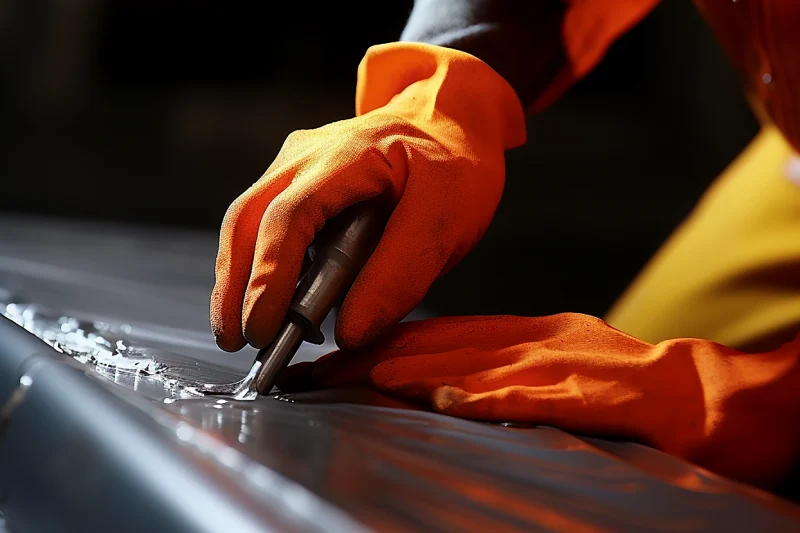
When coatings begin to deteriorate, the most immediate response is often to repaint the surface.
However, repainting without understanding the underlying cause of failure may only provide a temporary fix.
In many cases, the real issue lies deeper than surface degradation.
Identifying the Root Cause
Before deciding on repainting, it is important to identify why the existing coating failed.
Common causes include:
- Poor surface preparation during initial application
- Incompatible coating systems
- Environmental exposure beyond the coating’s design limits
- Moisture intrusion or trapped contaminants
- Incorrect film thickness
Applying a new coating over an existing problem may lead to repeated failures.
Surface Condition Matters
Existing coatings may show symptoms such as:
- Blistering
- Delamination
- Cracking
- Rust breakthrough
If these issues are caused by underlying corrosion or moisture, repainting alone will not solve the problem.
Proper inspection and surface preparation are critical before applying any new coating system.
The Importance of System Compatibility
New coatings must be compatible with the existing coating system.
Without compatibility checks, issues such as poor adhesion or chemical reactions between layers may occur.
A Better Approach: System Evaluation
Instead of automatically repainting, a more effective approach includes:
- Surface condition assessment
- Root cause analysis
- Compatibility testing
- Selecting a coating system suited to current exposure conditions
Protective coatings should be viewed as long-term systems, not just surface finishes.
Understanding why a coating failed ensures that the next solution provides lasting performance rather than temporary repair.